Simple Italy

Celebrating Your Inner Italian

  • Home
  • Contact us
  • Links

Wining and Dining in Ancient Rome

Posted March 16, 2011 by Sharon 3 Comments


Roberto Bompiani's depiction of an ancient Roman banquet from the Getty Museum.

By Emma Sanders

Guest Writer

Want to shake things up at your next dinner party? Take a cue from the early Romans. Pour Boone’s Farm, Yellowtail Shiraz, and a coveted Super Tuscan wine, but don’t offer your guests a choice. Instead, assign each guest to one of the three wines based on how much you like and value that person relative to his or her dinner companions. (Warning: you may lose some friends in the process.)

This kind of overt rank valuation was common at early Roman banquets, according to Dr. Nicholas Hudson of UNC Wilmington, who recently spoke on the topic at the University of Pennsylvania in Philadelphia. His lecture, Eat, Drink, and Be Merry:  The Changing Identify of Dining in the Roman World illuminates how styles of dining reflect a changing society.

On early Roman banquets, Pliny writes:

“He apportioned in small flagons three different sorts of wines; but it was not that the guests might take their choice: on the contrary, that they might not choose at all.  One was for himself and me; the next for his friends of lower order (for you must know the measures of friendship according to degrees of quality; and the third for his own free men.”

The Romans also applied this behavior to food, as hilariously summarized by the Latin poet Martial:

“Since I am asked to dinner… why is not the same dinner served to me as to you?  You take oysters fattened in the Lucrine lake, I suck a mussel through a hole in the shell; you get mushrooms, I take hog funguses; you tackle turbot, but I brill.  Golden with fat, a turtle-dove gorges you with its bloated rump; there is set before me magpie that has died in its cage.  Why do I recline with you?”

Over time, banquets shifted from the model of assigning guests social worth. Large sharing dishes became more common. These sharing dishes tended to be very similar in color and design to emphasize consistency of food served across a table. This growing egalitarianism of banquets demonstrated a social and cultural shift from the elitism of early Roman banquets.

In late Rome, a fissure grew between Romans who adopted the newer style of banquets and those who clung to elitism. Dr. Hudson espouses that the newer style of banquets ‑‑based on unity and sharing‑‑ even provided an early precedent for the rituals of Christianity.

To read more about Nicholas Hudson’s work,

visit http://www.archaeological.org/lecturer/nicholashudson


Filed Under: Culture, Food, Lifestyle, Rome, Wine Tagged With: ancient Roman customs, dining in ancient Rome, Nicholas Hudson, University of Pennsylvania

Colin Firth’s Inner Italian

Posted March 2, 2011 by Sharon 11 Comments

Italian film director and producer Livia Giuggioli with her husband British actor Colin Firth.

Like an astronomer discovering a new star or a botanist finding a new plant species, when I uncover a previously unknown Inner Italian, my heart races.

British actor Colin Firth took home the Best Actor Oscar on Sunday night for his role in the film The King’s Speech. But, far more impressive, to me, is his connection to bel’italia.

Thanks to a Diario Di Una Studentessa Matta post by Melissa Muldoon, my amica in the blogosphere, I learned that Firth speaks beautifully in Italian. She posted a video clip from the Red Carpet where the typically stiff-upper-lip actor jokes in Italian with a reporter whom he knows.

In the blink of an eye, he becomes more warm and animated than I’ve ever seen him onscreen.

The link to Firth’s Inner Italian is his gorgeous wife Livia Giuggioli whom he married in 1997. Giuggioli is a director, documentary film producer, environmentalist, eco-entrepreneur, and mother of two sons with Firth.

According to the New York Post, “Livia’s ‘Green Carpet Challenge,’ for which she dolled up in 100 percent eco garb and jewels to each of a number of award shows, had its climactic finale Sunday night as she strolled down the carpet in a gown assembled from 11 different vintage frocks—some, appropriately, dating back to the reign of King George VI.”

In an interview several years ago with The Independent, Firth commented on his Italian language skill. “Her English is better than my Italian will ever be. But if you’re going to live your life with someone you should, as a mark of respect, try to learn their way of conceptualising things.”

Firth is also taken with the power of la famiglia, as he explains in this quote to Vanity Fair Italy. “What strikes me about the Italians is their attachment to family. Livia’s family is beautiful and very close. From the family is derived a sense of inner security and stability that is not found in other cultures. We English, on the other hand, are always wandering apart … When I met my wife, I had to court her, present myself to her father. Before this, I had never met a 26-year-old woman who was still living with her parents.”

Colin Firth. Un bravo attore! Un bravo Inner Italian!

Filed Under: Culture, Film, Inner Italian Q & A, Language, Lifestyle Tagged With: Colin Firth, Livia Giuggioli, Oscar, The King's Speech

Greens, Borlotti Beans, and Polenta

Posted January 19, 2011 by Sharon 10 Comments

(Clockwise from top) Collard greens, broccoli rabe, and curly kale.

“Do you have a rabbit?”

I was so intent on punching in the number codes for my produce items in the self-checkout that, at first, I didn’t realize the woman was speaking to me.

“Do you have a rabbit?” she repeated. “Or a juicer?”

My puzzled expression encouraged her to elaborate. “All these greens, I thought maybe you have a rabbit,” she said gesturing to the bags of broccoli rabe, curly kale and collards on the counter. “You don’t eat them, do you?”

I squelched my urge to laugh and assured her that these greens were incredibly tasty. “I stir sauté them in olive oil and garlic,”  I offered.  “My family loves them.” (I didn’t go so far as to disclose that one of my proudest achievements as a parent is that both my daughters adore these hearty, healthful vegetables.) As I bagged my leafy booty and left the market, she still didn’t look convinced.

I thought of her that evening when we feasted on pungent broccoli rabe, borlotti beans braised with pancetta, and creamy polenta. We are some lucky bunnies!

This rustic dinner of greens, borlotti beans and polenta is typical of central and northeastern Italian country food in the winter. Borlotti rival the Tuscan favorite cannellini as my pick for best Italian bean. The borlotti have tan skin with black-magenta streaks. When cooked the skin turns a warm cocoa brown and the cooking broth and beans create a savory gravy. They’re so satisfying especially with some pancetta in the pot.

My local supermarket doesn’t stock borlotti beans so chances are yours won’t either. I used the superb organic borlotti from www.ranchogordo.com in Napa, CA. Some other online beans sellers are www.purcellmountainfarms.com and www.bobsredmill.com for cranberry beans, a good stand-in for borlotti.

Stir-Sautéed Greens

Makes 4 to 6 servings

Extra-virgin olive oil

1          large clove garlic, minced

1          pound broccoli rabe, kale, chard, or collard greens

Salt and freshly-ground ground black pepper

Wash the greens in plenty of cold water. Remove and discard tough stems. Chop the greens. There’s no need to dry them; the water on the leaves will create steam in the pan to help tenderize them.

Film a large sauté pan or large pot generously with olive oil. Scatter in the garlic and make sure it is filmed with oil. Set over low heat. Cook for about 3 minutes, watching and stirring frequently, or until garlic is softened. Do not brown.

Increase heat to high. Add half the greens to the pan; toss with tongs. Cover for about 1 minute or until the greens start to wilt. Add the remaining greens. Toss and cover for 1 minute. Uncover and cook, tossing, for about 2 minutes or until greens are wilted, brightly colored and glossy. Season to taste with salt and pepper.

Vino sangiovese from the province of Romagna.

This recipe for borlotti is inspired by the beans I ate at Poggio Duca, a wonderful agriturismo on the border between Romagna province and the Marche. The large inviting dining room has a bank of windows overlooking the valley below the medieval mountaintop village of San Leo.

Braised Borlotti Beans with Pancetta

Makes 4 to 6 servings

Extra-virgin olive oil

2 ounces thick pancetta or good-quality slab bacon, finely chopped

1 onion, chopped

1 tablespoon minced fresh rosemary

1 cup canned crushed tomatoes or tomato puree

1 pound cooked borlotti beans with cooking liquid (see following cooking method)

Salt and black pepper

In a large heavy pot, combine about 1 tablespoon oil with the pancetta. Cook over medium-low heat for about 5 minutes, or until the pancetta fat is rendered and the meaty streaks start to brown. Add the onion. Cook, stirring, for about 5 minutes or until the onion is translucent. Add the rosemary and tomato. Bring to a simmer. Add the beans with their cooking liquid. Stir.

Partially cover the pot and cook at a gentle simmer for about 45 minutes until the beans thicken slightly and the flavors blend. Season to taste with salt and black pepper.

Basic Method for Cooking Dried Beans

Makes 6 to 7 cups

1          pound dried beans, sorted and washed

12        cups good-tasting water (approximately)

1          carrot, cut in 2-inch chunks

2          ribs celery heart, cut in 2-inch chunks

1          small onion, cut in half

1          bay leaf

Several parsley stems

Salt

In a large pot, soak the beans overnight in cold water to cover.

Drain the beans and return them to the pot. Cover with water about 2 inches above the beans. Add the carrot, celery, onion, bay leaf, and parsley. Cover and bring almost to a boil. Remove the cover and reduce the heat so the water liquid simmers. Skim any foam and discard.

Partially cover the pot. Adjust the heat so the water liquid simmers but does not boil. Cook for 1 hour. Test a bean for doneness. Add slightly more water if needed to keep beans covered. Stir gently. Cook for 1 to 2 more hours, adding more liquid as needed, or until beans are tender but hold their shape. Taste. Season to taste with salt.

Remove from the heat to cool.  Remove and discard the carrot, celery, onion, bay leaf, and parsley stems. Place the beans in a covered container and refrigerate for up to 2 weeks before using in a recipe. The beans may also be frozen if you plan to use them in a recipe like soup where firm texture is not crucial.

Creamy Polenta

Makes 4 to 6 servings

1          cup cornmeal, preferably stone-ground

4          cups chicken broth, water, or milk

1/4       teaspoon salt

Grated Pecorino Romano cheese

Whisk the cornmeal, milk, and salt in a saucepan. Cook, whisking constantly, over medium-high heat, for about 5 minutes, or until thickened. Reduce the heat to low. Simmer, stirring occasionally, for about 2 minutes. Remove from the heat.

Do you eat Italian rabbit food, too? How do you prepare your greens? What do you serve with them?

Filed Under: Culture, Food, Lifestyle, Markets, Mediterranean diet, Recipes Tagged With: borlotti beans, broccoli rabe, Italian greens, Italian winter meal, kale, polenta

Colossal Effort

Posted January 4, 2011 by Sharon 8 Comments

We had fun with our tongue-in-cheek commentary Colosseum ‘Naming Rights’ about the Italian government’s plea for private funding to restore this seminal landmark. Now, we’re eating some of our words.

Diego Della Valle, owner of the wildly successful Tod’s luxury shoe and accessories company, based in Le Marche, has pledged €25 million (approximately $33 million) to the project. The motivation appears to be noble. Della Valle is quoted in the Wall Street Journal, “You won’t find a Tod’s shoe or bag hanging from the Colosseum’s walls. It’s an undertaking with great cultural relevance and that’s enough. We are ambassadors of Italy’s life style and it’s really our duty to give off a strong symbol.”

Meanwhile, the stunning results of a just completed $1.4 million restoration of the Colosseum’s hypogeum (the levels lying below the ground) are the subject of a fascinating article in this month’s Smithsonian. Heinz-Jürgen Beste of the German Archaeological Institute in Rome, led a team of German and Italian archeologists in a 14-year project deciphering the functions of the hypogeum. This subterranean nerve center housed elaborate mechanisms for storing—and raising to stage level—the scenery, equipment and wild beasts employed in the lavish, gruesome spectacles.

The Colosseum flourished from the first to sixth centuries AD. After the empire crumbled, the massive structure successively became a stone quarry, a dump, and shopping center. All the while, natural decay took its course eventually burying the hypogeum under 40 feet of soil. During Benito Mussolini’s glorification of ancient Rome in the 1930s, crews excavated the earth hiding the hypogeum but the inner workings remained a mystery.

Thanks to the contributions of Tod’s and the scholarship of Beste and other archeologists, the Colosseum will continue to reveal its wonders. But what about the Italian sites (nearly 40 in all) on the World Monuments Fund Watch Sight? This a list that calls attention to endangered cultural locations.  Pompeii has been on the list since 1996 and is recently in the news because of the increasing rate in which structures there are collapsing.

Pompeii's Temple of Venus

The future of these sites is indeed uncertain.  Newsweek reports in The Ruined Ruins that the 2011 budget of the Italian cultural ministry, which finances most preservation, is $340 million, down from $603 million in 2008. You can learn more about efforts to save Italy’s treasures at the culture watchdog and education group Italia Nostra site.

Tell us what you think about saving Italy’s archeological treasures.

Who should pay for it? Is it worth the cost?

Filed Under: Architecture, Culture, Rome, Travel Tagged With: ancient Rome, archeology, Colosseum, Diego Della Verde, Italian ruins, Pompeii, Smithsonian, Tod's

Buon capodanno

Posted January 2, 2011 by Sharon 1 Comment

May your 2011 be filled with
Inner Italian moments.

Auguri!

Filed Under: Culture, Language, Lifestyle, Miscellany, Travel Tagged With: Campari, capodanno, Italian New Year

Christmas Cherubs

Posted December 23, 2010 by Sharon 2 Comments

Luciano Pavarotti’s sweet, powerful voice always sounds, to me, like a benediction. Never more so than in this sentimental Italian carol Mille Cherubini in Coro, Chorus of 1,000 Cherubs. The lyrics, set to a melody by Schubert, are about a choir of cherubs looking over the baby Jesus . . . and every baby.

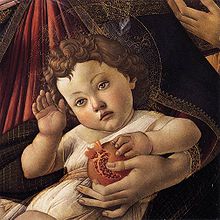
Detail from Madonna of the Pomegranate by Sandro Botticelli.

These are the lyrics in Italian and English. . .

Mille Cherubini in Coro

Dormi, dormi,
sogna, piccolo amor mio.
Dormi, sogna,
posa il capo sul mio cor.

Mille cherubini in coro
ti sorridono dal ciel.
Una dolce canzone
t’accarezza il crin
Una man ti guida lieve
fra le nuvole d’or,
sognando e vegliando
su te, mio tesor,
proteggendo il tuo cammin.
Su te, mio tesor,
proteggendo il tuo cammin.

Dormi, dormi,
sogna, piccolo amor mio.
Dormi, sogna,
posa il capo sul mio cor.

Chiudi gli occhi,
ascolta gli angioletti,
dormi, dormi,
sogna, piccolo amor.

Dormi, dormi,
sogna, piccolo amor mio.
Dormi, sogna,
posa il capo sul mio cor.

Chiudi gli occhi,
ascolta gli angioletti,
dormi, dormi,
sogna, piccolo amor.

Sogna, piccolo amor.

A Choir of a Thousand Cherubs

Sleep, sleep,
dream, my little love.
Sleep, dream, ,
rest your head on my breast.

A choir of a thousand cherubs
smiles on you from the sky
A sweet song
caresses your brow,
A hand is gently guiding you
through the clouds of gold,
dreaming and keeping watch
over you, my treasure,
protecting your path through life.
Over you, my treasure,
protecting your path through life.

Sleep, sleep,
dream, my little love.
Sleep, dream,
rest your head on my breast.

Close your eyes,
listen to the little angels,
sleep, sleep,
dream, my little love.

Sleep, sleep,
dream, my little love.
Sleep, dream, ,
rest your head on my breast.

Close your eyes,
listen to the little angels,
sleep, sleep,
dream, my little love.

Dream, my little love.

Mille Cherubini in Coro, on Pavarotti’s O Holy Night CD with Kurt Herbert Adler and The National Philharmonic, is available on amazon.com

Filed Under: Culture, Language, Miscellany, Music Tagged With: Italian carols, Italian Christmas songs, Luciano Pavarotti, Mille Cherubini in Coro

  • « Previous Page
  • 1
  • …
  • 24
  • 25
  • 26
  • 27
  • 28
  • …
  • 41
  • Next Page »
Follow Simple Italy on FacebookFollow Simple Italy on RSS
Lasagne_19 Simple Italy's Greatest Hits at a click!
Lasagne alla Bolognese and more

Recent posts

  • The Hill Towns of Molise
  • Fior di Latte Cheese
  • In the Mood for Molise, Italy
  • Silk from the Sea in Sardinia
  • Driving a Ferrari Spider

Posts by Category

  • Abruzzo (12)
  • AirBnB (1)
  • Amalfi (8)
  • Archeology (3)
  • Architecture (21)
  • Art (19)
  • Artisans (4)
  • Automobiles (1)
  • Bakery (1)
  • Basilicata (3)
  • Bologna (4)
  • Books (21)
  • Calabria (4)
  • Campania (17)
  • Cooking Classes (5)
  • Cremona (2)
  • Culture (174)
  • dreamofitaly (1)
  • Driving in Italy (2)
  • Emilia Romagna (2)
  • Ferrari (1)
  • Ferrari Museum (1)
  • Film (22)
  • Florence (30)
  • Food (134)
  • Fred Plotkin (1)
  • Friuli-Venezia Giulia (2)
  • Gardening (25)
  • Genoa (2)
  • Golf in Italy (1)
  • Guides (1)
  • History (8)
  • Hotels (14)
  • Inner Italian Q & A (11)
  • Italian seafood (7)
  • Italy Artisans (3)
  • Italy restaurants (17)
  • Language (86)
  • Le Marche (4)
  • Lifestyle (113)
  • Liguria (2)
  • Lombardy cooking (5)
  • Lucca (3)
  • Mantua (1)
  • Markets (26)
  • Mediterranean diet (55)
  • Milan (1)
  • Miscellany (86)
  • Modena (1)
  • Molise (3)
  • Mt. Etna (1)
  • Music (9)
  • Naples (2)
  • New Orleans (2)
  • Opera (1)
  • Palermo (3)
  • People (3)
  • Photography (4)
  • Piedmont cooking (1)
  • Puglia (9)
  • Quotes (4)
  • Recipes (64)
  • Rome (8)
  • Salerno (3)
  • Sardinia (4)
  • Sicily (15)
  • Test Drive (1)
  • Testimonials (2)
  • Travel (110)
  • Trentino Alto-Adige (1)
  • Tuscan cooking (17)
  • Tuscany (30)
  • Venice (2)
  • Videos (2)
  • Wine (23)

Inside SimpleItaly

  • American Couple Marries Italian-Style
  • Appearances
  • Contact us
  • Cooking Up an Italian Life
  • Le Marche Tour with Luisa
  • Links
  • Palazzo Donati Sample Itinerary
  • Palazzo Donati Tours
  • Privacy and Site Policies
  • Publications and TV
  • Sharon’s Inner Italian
  • SimpleItaly Adventure in Tuscany Tour
  • Thank You
  • Walter’s Inner Italian

Tags

Abruzzo bucket list Florence Gardening gelato Genoa Inner Italian Italian cooking italian culture italian food Italian food stores italian language italian lifestyle italian markets Italian music Italian pasta recipe italian recipes Italian tourism italian travel italian wine Italy Italy travel Lago di Como Lake Como Malika Ayane Mediterranean diet mozzarella di bufala Naples tourism Paestum Paolo Conte porcini Puglia Rome Santa Croce Sardegna Sardinia Sicily Southern Italy Stile Mediterraneo Sulmona Tuscan cooking Tuscany Uffizi Gallery Villa Pipistrelli women and travel